
On Daylight

I am currently flying 30,000 feet above land, watching the patches of earth pass by beneath me. It’s 7am. Faint rays of light pierce the clouds and light up parts of the ground, while the rest still remains in slumber.
The difference that a ray of light makes to a space is dazzling. It brings warmth, positivity, and the promise of a new day.
I’ve spent the last few years looking at workplaces and observing how they function. One of the first things I notice is the light within these spaces — almost always artificial. I’ve often asked the teams why, and the answers usually fall into one of three:
WHAT THEY TELL ME
→ The glare from the windows and the heat makes it difficult to look at the screens.
→ Oh, it’s always been this way — we never really considered opening them.
→ We’ve learnt to find artificial light comfortable — and this is even when good natural light is available.
More often than not, many workplaces will have natural light available around them but have never been able to let it inside in a controlled manner. Three specific workplaces I’ve worked with/observed, show exactly what this looks like — and what becomes possible when it’s addressed.
PROJECT 01 - ACOUSTICS MANUFACTURING COMPANY | Before & after redesign
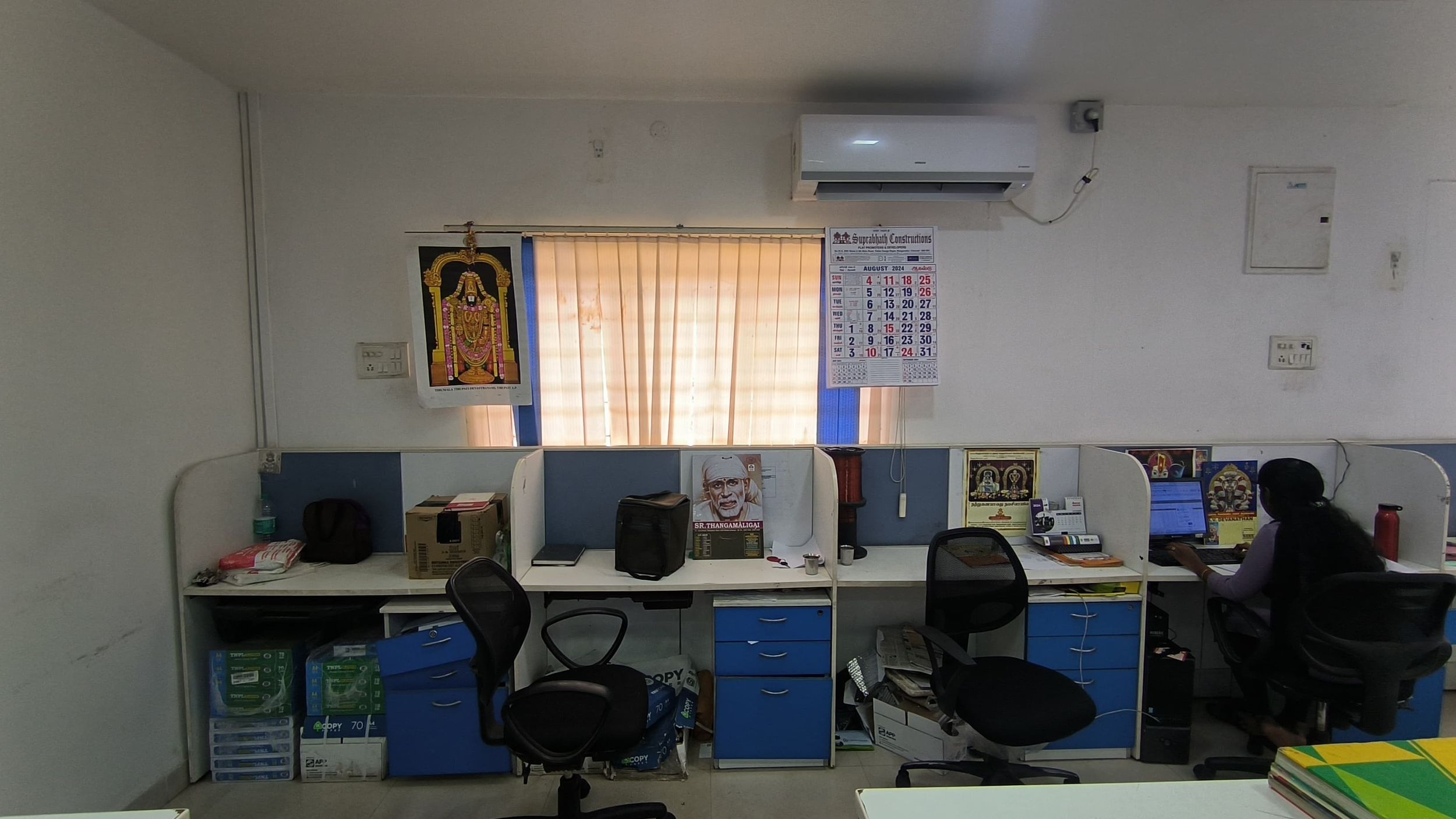
Before
The staff were seated against the windows — but the blinds were fully drawn due to glare on them, not on the screens. The larger windows were enclosed within disproportionate cabins that blocked out light entirely. Partitions were awkwardly placed, making it inconvenient to properly access the windows at all.
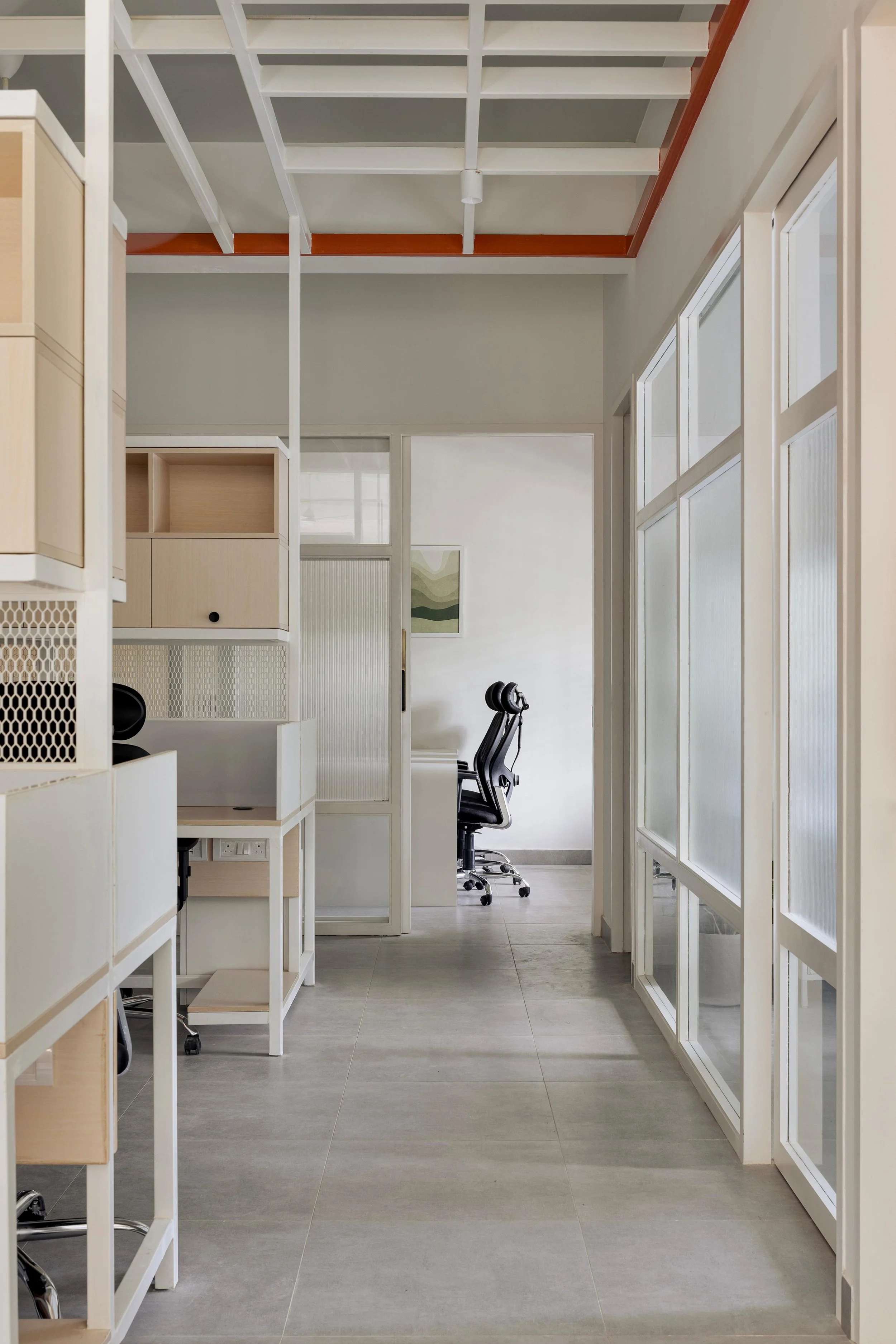
After
We repositioned the workstations so they received filtered light from multiple sources - cutting off glare and heat. Cabin sizes were altered and fluted glass partitions were added to draw light deep into the workplace. We also framed specific treescapes and cut off views to unsightly buildings, so the teams had something worth looking up at — from their dining area and from their desks.
PROJECT 02 - TECHNOLOGY COMPANY | 10th floor · Bay of Bengal views · Observed
The office is flooded with natural light and has gorgeous views of the Bay of Bengal. Yet there are absolute dark corners — blinds pulled down, artificial lights turned on. The reasons vary from team to team. The engineering and design teams have been accustomed to working in near-darkness, with only the light from their screens. This helps them work better and focus better. The product design and finance teams face glare and heat issues, but prefer filtered light rather than none.
The solution required two things: a slight reorientation of workstations to address glare, and relocating the engineering teams to rooms where they had the flexibility to shut out the light entirely — on their own terms.
PROJECT 03 - MARKETING TECHNOLOGY COMPANY | Our earlier design · Post-occupancy observation
We designed their workplace a few years ago and had provided large operable windows all around the workstations. It seemed to work well initially. But on subsequent visits at 11am, 2pm and 4pm, the blinds were down fully — similar issues of glare. This time, though, they told us something important: they loved the natural light for the pantry areas, the walkways, and the smaller discussion booths. Only the open workstations required filtered light because of the screens.
The space had been telling them what it needed. The pantry, the walkways, the booths —all thriving. The workstations — struggling with direct light. The fix wasn’t to close the windows. It was to redirect what was already there.
KEY TAKEAWAYS FROM ALL THREE PROJECTS:
Daylight is a wonderful design element — but it has to be brought in thoughtfully. Availability is not the same as access.
Workstations need filtered light — diffused, not direct. The problem is almost never the windows. It is where people sit in relation to them.
Common areas, walkways, pantries and discussion booths thrive under natural light. These are the spaces that most benefit from brightness and connection to the outside.
The space has to be flexible enough for people to regulate their own environment. A team that works best in near-darkness should have that option without fighting the building for it. A team that thrives under good diffused light should have that too. Good design holds both at once.
THE QUESTION WORTH ASKING
“Are the people who need brightness getting it — and are the people who need focus protected from it? Does your space allow both to be true at the same time?”
Natural light is not a luxury and it is not a universal answer. It is a material — the most available and the most underused in most offices I walk into. What matters is not whether you have it. It’s whether you’ve thought carefully about where it goes. And perhaps more simply: the next time you walk into your office in the morning — notice what the light is doing. And whether anyone has asked it to do anything at all.
Thank you for reading Better Workplaces! Each edition : one observation from the field. Real projects. Real Conversations. Real Findings.